Amazon is launching a new self-driving delivery device called Scout.
In a promotional video, you see a six-wheeled, bright blue bot roll down the sidewalk, cross the street, and stop in front of an idyllic suburban house. A woman comes out and Scout’s lid lifts, revealing a Prime box. Easy, right?
Not really. The reality of streets and sidewalks is messy and complex. There are obstacles to avoid, mischievous teenagers to dodge, and numerous unseen technical issues.
“The devices will autonomously follow their delivery route but will initially be accompanied by an Amazon employee,” Amazon said in a statement. “We developed Amazon Scout at our research and development lab in Seattle, ensuring the devices can safely and efficiently navigate around pets, pedestrians and anything else in their path.”
Kalamsat-V2 was made by students belonging to Space Kidz India, a Chennai-based space education firm.
ISRO will launch the satellite from Satish Dhawan Space Centre at Sriharikota at 11: 37 pm on 24 Jan, 2019.
Kalam SAT is a Femto Satellite.
It is named Dr.A.P.J. Abdul Kalam and was built by an Indian High school student team, led by Rifath Sharook, an 18-year-old from the Tamil Nadu town of Pallapatti.
This 10-cm cube and the first 3-D printed satellite has a life span of two months and weighs 1.2 kg.
It is built at a cost of Rs 12 lakh and will be first to use the rocket’s fourth stage as an orbital platform. Following this, the fourth stage will be moved to a higher circular orbit to establish an orbital platform from where it will carry out experiments.
“The main purpose of student satellites is to enable students to conduct experiments in space. We see that students get involved in the whole process of building the associated systems, including the satellite bust and power system, instead of concentrating on the main science. We wanted to tell them that they can just bring their payload and we will plug in. All the paraphernalia is available with us. Students should just focus on the science, experiment, research and innovation,” Sivan had said while announcing the launch of Kalamsat in New Delhi.
This is, probably, not any news from ‘tech world’ but being Indian, I thought it should be shared.
In Spain, this lady sings this song in the morning in a Radio Station. It has gone viral worldwide. And I cannot restrict myself to share this soothing song “Priyam Bharatam”…
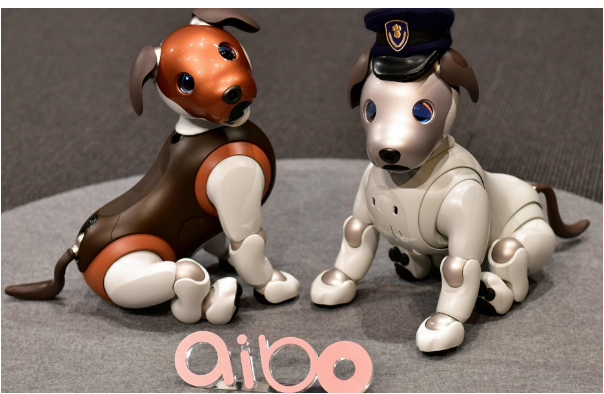
Sony’s incredible puppy-sized robot dog aibo is equipped with cameras, artificial intelligence and internet capability.
It can now remotely check up on family members, children or even pets.
It is just 30 cm with flapping ears and cutting-edge LED eyes.
The owner will receive progress reports via smartphone.
The latest aibo model, which can also display “emotions”, was released in January last year and sales hit 20,000 in the first six months, according to Sony.
It costs nearly $3000.
In the era of the Internet of Things and facing a rapidly ageing population, Japan has mobilised rice cookers, electric pots and other household devices to keep watch on elderly people living alone.
A platform for innovators of all sizes to build their brands, every major technology company on the planet participates in CES in some way — by exhibiting, speaking, sponsoring, attending or holding co-located events and business meetings.
The Consumer Electronics Show in Las Vegas has come and gone (8 Jan – 12 Jan),have a look at those trends that will shape the year ahead in technology?
Foldimate
the bot that folds your clothes … you have to feed each item in one at a time and it can’t handle some items. So it may not be the timesaver of everyone’s dreams.
Royole flexible QWERTY keyboard
it can be laid down on any flat surface and connected via Bluetooth. At the push of a button, it’ll roll up and you can stick in your pocket. Official pricing is not yet announced, but expect to see the keyboard quite literally roll out in the second quarter of 2019.
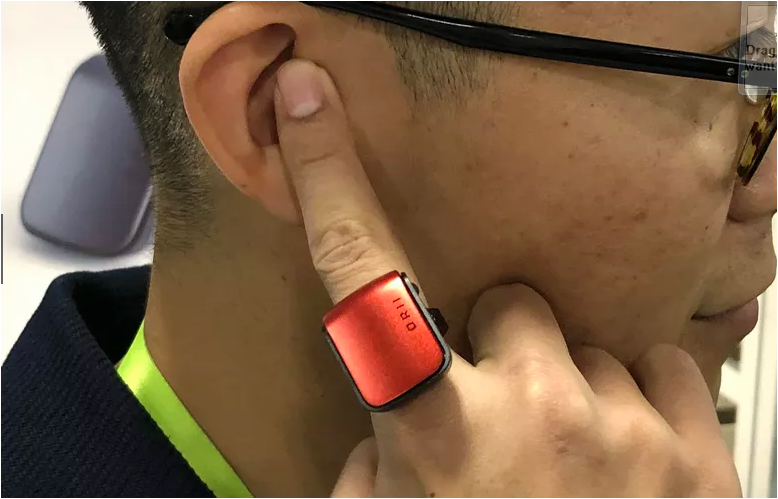
Orii
A bone-conduction ring that sends sound up your finger into your ear when you press your finger up against that spot you see in the picture. With it, you can take a call with your cell phone in your pocket.
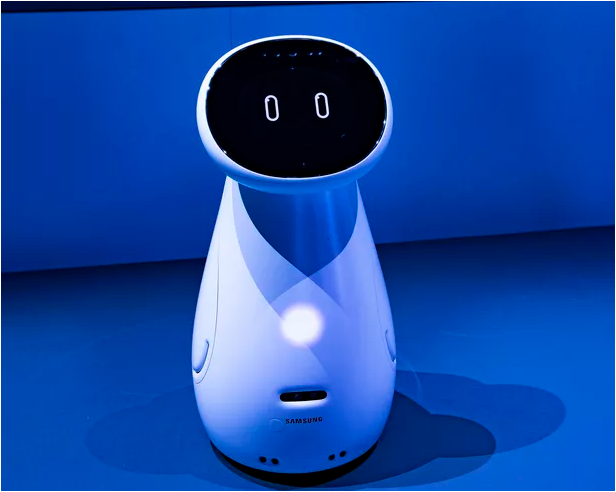
Samsung bots
3 appealing robots: The Bot Air is essentially a roaming air purifier, the Bot Care monitors your health and the Bot Retail fetches items like a store clerk.
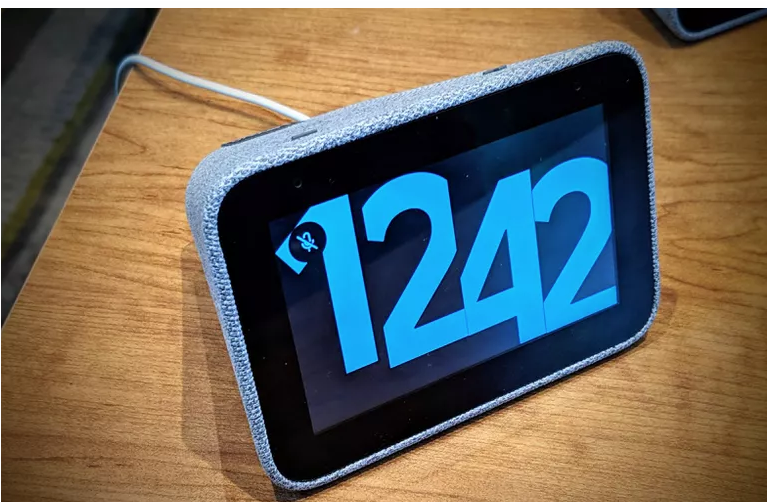
Lenovo Smart Clock
When we replaced alarm clocks with cell phones, we sacrificed one of the most satisfying rituals of the day. Lenovo brings back that joy in 21st-century style: The Lenovo Smart Clock has a touch sensor that you hit when you’re annoyed it’s time to wake up. Once for snooze, twice for “leave me alone, I’m sleeping for the rest of the day.” When you dismiss the alarm, it can trigger your “Good Morning” routine through Google Assistant and turn on your lights, tell you about your day and play the news. It ships this spring for $80.
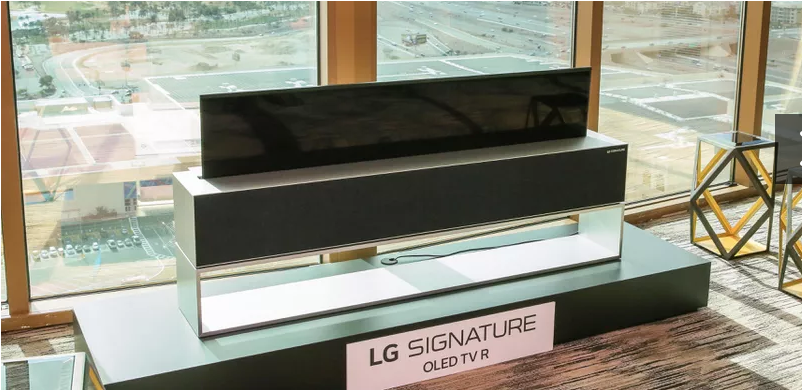
LG Signature OLED TV
The much-anticipated rollable OLED TV is finally here – ‘it’s incredible’
and there are many, many such advancing and innovative technology… visit this link, go through it –https://www.digitaltrends.com/ces-2019/ and explore to your fullest.
Think about all the parts: millions of people, schools, offices, shops, parks, utilities, hospitals, homes and transport systems.
Changing one aspect affects many others.
Architects, engineers, construction companies and city planners have long used computer-aided design and building information modelling software to help them create, plan and construct their projects.
But with the addition of internet of things (IoT) sensors, big data and cloud computing, they can now create “digital twins” of entire cities and simulate how things will look and behave in a wide range of scenarios.
‘Virtual Singapore’ has developed a virtual digital twin of the entire city using software developed by French firm Dassault Systemes.
‘Virtual Singapore’ is a 3D digital twin of Singapore built on topographical as well as real-time, dynamic data.
It will enable users from different sectors to develop sophisticated tools and applications for test-bedding concepts and services, planning and decision-making, and research on technologies to solve emerging and complex challenges for Singapore.
Bernard Charles, Dassault Systemes’ chief executive, says,”The problem is that when we decide about the evolution of a city we are in some way blind. You have the urban view of it – a map – you decide to put a building here, but another agency has to think about transport, another agency has to think about commercial use and flats for people.”
“The creation of one thing changes so many other things – the flow and life of citizens.”
For full information please visit following links-
If we go by various reports, India badly lags behind its neighbouring country China.
Google and IBM have published almost 62 percent of all industry research publications, while there is only one Indian company in the top 10 – TCS with 13 percent of all publications, Scopus Analysis shows.
A White House report states that AI-related patent submission has increased 200 percent in recent years and the country. And in 2017, China produced more academic papers on AI than all of the 28 EU countries combined. However, India lags. Indian academia produces less machine learning papers than a single university in China and all the new companies do lesser than a single company in the US.
IIT- Madras has signed a joint development agreement with Applied Materials India to conduct research in Data sciences, Machine learning and AI. IIT Kharagpur is setting up a Center of Excellence in AI, which will be seed funded by Capillary Technologies with Rs 5.64 crore.
The four-legged Orabates pabsti lived much before the dinosaurs.
Scientists have used a nearly 300-million-year old fossil skeleton and preserved ancient footprints to create a moving robot model of prehistoric life.
Evolutionary biologist John Nyakatura at Humboldt University in Berlin has spent years studying a 290-million-year-old fossil dug up in central Germany’s Bromacker quarry in 2000.
The four-legged plant-eater lived before the dinosaurs and fascinates scientists “because of its position on the tree of life,” said Mr. Nyakatura
IBM, at CES 2019 unveiled the IBM Q System One , a 20-qubit quantum computer that’s built for stability, but with some very flashy design.
IBM Q systems are designed to one day tackle problems that are currently seen as too complex and exponential in nature for classical systems to handle.
Winfried Hensinger, professor of quantum technologies at the UK’s University of Sussex, told, “Don’t think of this as a quantum computer that can solve all of the problems quantum computing is known for. Think of it as a prototype machine that allows you to test and further develop some of the programming that might be useful in the future.”





 ITechiee