
The Galaxy S10 5G features the firm’s biggest-ever non-folding phone display and promises faster data speeds when networks become available.
For complete information please visit:
The Galaxy S10 5G features the firm’s biggest-ever non-folding phone display and promises faster data speeds when networks become available.
For complete information please visit:

Encryption helps keep personal data, files, accounts, and pretty much everything inside the phone safe and sound, away from the hands of thieves and cybercriminals.
One can’t crack into someone else’s phone without knowing their pattern/PIN/password, and can’t extract information or files out of it either. But the problem with encryption is slower performance.
Adiantum is a new encryption algorithm developed by Google that serves as a lighter, more efficient alternative to AES encryption.
It’s made specifically to run without any added dedicated hardware, which means that cheaper devices and older devices, like Android Go phones, will be able to take advantage of this new encryption algorithm to have privacy and security.
Adiantum also aims to secure sensitive information and encrypt other devices such as smartwatches and Internet-connected medical devices, according to Google’s blog post.
Please check out this Google’s post this blog post for more information:
https://security.googleblog.com/2019/02/introducing-adiantum-encryption-for.html
Source:The Verge : Google has a new form of encryption called Adiantum that’s designed to bring storage encryption to cheaper Android devices without impacting performance. Currently, devices such as low-powered Android Go smartphones, smart watches, and TVs fall below Google’s performance requirements for encryption. With Adiantum, Google says that every Android device can be encrypted, meaning privacy won’t just be for those who can afford it.

The restaurant has four robots named ‘Beauty Serving Robots’, that are to be charged for at least 3 hours to work for a day.
Every table at the restaurant has an iPad through which orders can be placed directly. Once the order is made, the robot picks up the food from the chef and delivers the same to the right customer.
These robots are capable of understanding two languages namely English and Tamil.
For more information please visit:

Facebook announced a digital skilling, mentorship programme aimed at inspiring and guiding tribal girls in five states.
“Spanning across West Bengal, Maharashtra, Jharkhand, Odisha, Madhya Pradesh, the initiative seeks to nurture and train young girls from India’s tribal heartland across three core areas – digital literacy, life skills, leadership and entrepreneurship,” Facebook said in a statement.
“Spanning a period of one year, the programme will see on-ground trainers impart digital literacy to the identified girls through a dedicated digital skilling curriculum while the 25 women leaders mentor them via Facebook or WhatsApp on a fortnightly basis,” the statement added.
To be a part of the programme, applicants will be required to be over 18 years of age and of tribal origin.
“The programme will specifically focus on girls who’ve dropped out of school due to financial constraints, reside near the skilling centre to ensure regular participation,” the statement added.
For more information please visit:
Source:TIME

He tweeted photos and video of the new Raptor rocket engine, which is supposed to power a prototype Starship that will take people around the world. One day Musk envisions the rocket will take people to Mars.


Starship is the 100-passenger stainless-steel vehicle SpaceX is building to take people and cargo to Mars and other distant destinations. Starship will launch atop a giant rocket SpaceX calls Super Heavy.
For more detail information please visit :
https://www.space.com/43218-spacex-raptor-rocket-engine-test-video.html

Researchers at New York University and Stanford University studied the impact of quitting the social network on their behaviour and state of mind.
For more information please visit following 2 links:
https://www.theguardian.com/technology/2019/jan/31/how-facebook-robbed-us-of-our-sense-of-self

The company’s official explanation is that it decided to shutter the site “due to low usage and challenges involved in maintaining a successful product that meets consumers’ expectations”.
Perhaps those “challenges” largely relate to a data leak in the social network that it discovered in March 2018 but did not disclose for six months.
That leak “potentially affected up to 500,000 accounts”, allowing third-party applications to access information marked as private, although Google said it had found “no evidence that any profile data was misused”.
The company had initially planned to shut the social network down in August this year, but in November it discovered another bug that gave apps access to non-public information, and brought forward the shutdown to April.

According to a report by The Bloomberg, a recently conducted survey by Google called Googlegeist suggests that when questioned about the confidence the employees have in CEO Sundar Pichai, 74% responded yes, which has dipped from 92% of last year’s survey.
A similar decline in affirmative answers was seen when employees were asked about the work satisfaction and compensation paid to them, and more, with 54% responding in favor of Google as opposed to the 64% seen in 2018.
The figures aren’t too concerning but Google needs to look into the declining number and figure out solutions to gain back the goodwill of its employees.
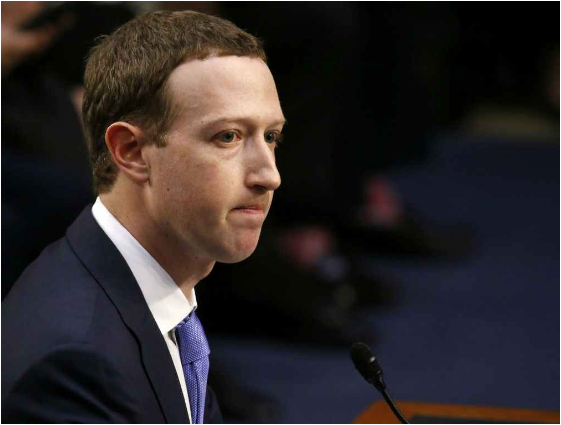
Zuckerberg has now explained that combining these three platforms will provide offer more secure end-to-end encryption. While end-to-end encryption is currently available only on WhatsApp, this move is said to benefit Messenger and Instagram users as it would enable them to send end-to-end encrypted messages across these platforms. Right now end-to-end encryption has to be activated on Messenger whereas it’s not available on Instagram DMs.
He also noted that ‘tens of millions’ of Android users who use Messenger as their default SMS app at present would benefit from having encryption enabled as a default.
“The integration that we’re thinking about, we’re really early in thinking through this,” said Zuckerberg during the earnings call. “There’s a lot more we need to figure out. I think it’s the direction we should be going with more things in the future,” he added.
But while Facebook’s CEO is planning to broaden the availability of end-to-end encryption by stitching the apps’ infrastructure into one, several questions have raised about privacy and how users data will be shared across these messaging services.
For more information visit:

Today, Loon is announcing a partnership with Canadian telecommunications company Telesat, in a deal that will see Loon’s custom software service for managing its LTE balloon fleet be put to use controlling Telesat’s new constellation of Low Earth orbit satellites.
It’s part of Loon’s realization that no one solution will get internet everywhere across the globe, and that its technology can benefit a major player in an industry it once viewed as a potential competitor.
Loon has spent a majority of its existence as a Alphabet-funded project developing this software, and its become an instrumental system for controlling the network traffic for Loon’s LTE service in areas like Brazil, Peru, and elsewhere around the globe where the company has performed field tests.
Around 3.5 billion people, or a bit under half the world’s population, don’t have access to the internet, according to the 2018 Global Digital report.
Today, current options for bringing remote areas online, like geostationary satellites that sit more than 20,000 miles above the surface, provide ample coverage area, but suffer from high latency and sluggish connection speeds. They’re also immensely difficult and expensive to maintain. For companies like Loon and Telesat, newer solutions ranging from satellites in Low Earth orbit — a more cost effective and lower latency portion of space — to stratospheric balloons and airships are necessary to begin bridging the gap. And it’s no longer about providing a single, one-size-fits-all solution, but a patchwork of different approaches all targeting different segments of the connectivity problem.
For more information visit this link:
Where Learning is Fun
Everything Techiee and interestiee...
 ITechiee